
‘Scratching the surface of patient interaction’ by Young Dentist Dr Hafsa Khan
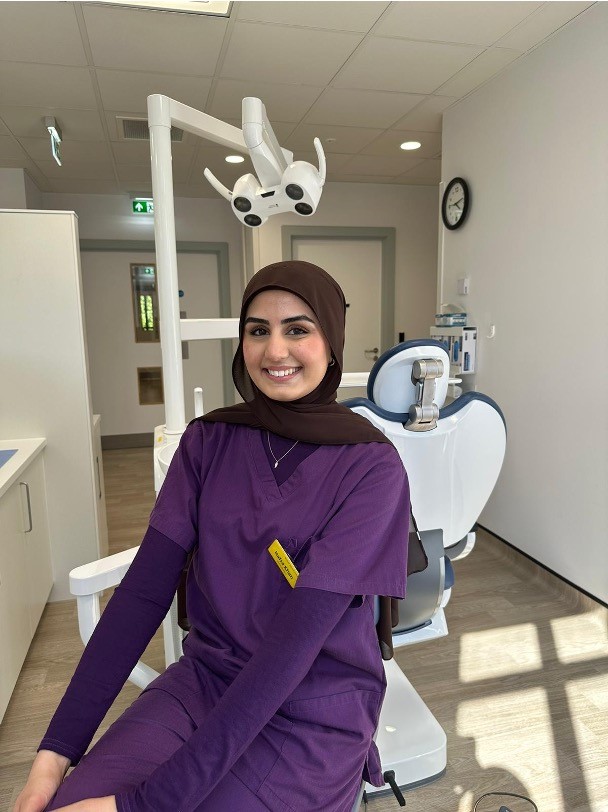
I have only been working as a dentist for 14 months and have already seen how dentist-patient communications shape behaviour change.
Dental school had prepared me really well academically, but I quickly realised as I started working, that I had only scratched the surface of communication with patients. Building rapport, seeking feedback, and mastering dentist-patient communications are learned skills which develop over time and grow with experience.
There is emotional unpredictability which we must navigate daily in what I feel are high-pressure environments. If we lack the confidence or outward character patients may expect - and research suggests that 65% of dentists identify as introverts (1) - communications can be very challenging, making continued improvement essential.
I have found myself wondering how other medical fields approach communications, and what lessons they might offer to dental practice. For instance, veterinarians cannot communicate directly with animal patients, so consultations rely on three-way communications between the vet, the animal and the owner, alongside interpretation of non-verbal cues. In theory and comparatively, this places dental professionals in a privileged position: patients can describe their concerns directly, engage with us, receive tailored guidance on behavioural change and act on it without an intermediary. If only it were that simple!
The Department of Health (2) describes behaviour change as ‘building motivation to change’, with the key word here being motivation.
For veterinarians and pet owners, their shared commitment to an animal’s welfare, physical health and emotional well-being may provide the right motivation that strengthens communication and supports behavioural change. In dentistry, finding common ground with patients is less straightforward. While professionals focus on the health status or pathology of teeth and gums, patients may focus more on what makes a smile aesthetically appealing, or what they may define as a healthy smile themselves; namely a white one. When you dig deeper, many patients don’t even know where their floss or interdental brushes are kept (if they do have some in the first place!) and might even skip evening toothbrushing that they find to be an additional burden after a long day.
I had not expected the patient journey and response to be so multi-faceted or unpredictable. Many of us leave dental school equipped with a wealth of theory and clinical knowledge, but practice demands far more, and managing patients continually stretches our skills.
More than 20 years ago, a dental hygiene publication described flossing as ‘Dental Hygiene’s Sacred Cow’.(3) It cited psychologists Robert J. Kriegel, PhD, and David Brandt, PhD, who urged professionals to re-assess outdated beliefs and practices, the ‘sacred cows’ that inhibit change and responsiveness. If patients struggle to adopt flossing, should we continue promoting it, simply because we embrace it ourselves?
Some patients maintain healthy teeth and gums despite minimal flossing and following relatively limited oral hygiene practices. This may reflect favourable genetics, a balanced oral microbiome and saliva composition. Their experience can reinforce a survivorship bias, leading them to see little value in flossing because they and people they may know have always managed well without it.
Explaining that early periodontal disease can be reversible (gingivitis) but bone loss from irreversible disease is not can be eye-opening. I find this message particularly effective with middle-aged and older patients, who may be more inclined to prioritise their health, particularly after they may have already experienced the damage that uncontrolled periodontitis can cause.
The ‘Sacred Cow’ article remains relevant: Although published in 2005, its argument still applies to current attitudes towards flossing. If patients will not use dental floss, we need to consider recommending other methods. What alternatives can we offer?
After winning the 2025 BSP Gum Health Competition earlier last year, I received a Philips Power Flosser as part of the award. I had never felt the need to try one because my interdental spaces are tight and I was satisfied with conventional floss. However, the Power Flosser proved much easier to use than regular floss, particularly around hard-to-reach back teeth. It left my mouth feeling noticeably cleaner, required no mirror and relied less on technique: I could simply guide it from tooth to tooth very easily. I was pleasantly surprised and could see why many of my patients would find it far more convenient.
Whether we recommend conventional floss, interdental brushes or power flossers, we need tools that can motivate patients over the long-term. Dentistry may be central to our lives, but it is not central to theirs.
We live in a world where smartphone cameras, selfies and digital algorithms continually expose people to socially constructed ideals of perfection. This pressure to meet superficial aesthetic standards can easily divert attention from meaningful self-care. Our role is therefore to show patients that a healthy smile is not defined by just white or perfectly aligned teeth. Healthy gums provide the foundation; neglect can lead to inflammation, recession and bone loss, ultimately compromising the smile they desire.
This year has continued to encourage my interest in Restorative Dentistry, with periodontics laying the groundwork. I look forward to continuing my development in 2027, as dentistry offers endless opportunities to develop new skills, and to learn new communication techniques which will continue to benefit my patients along the way.
References